
Creating bespoke oak fencing & gates.
Skilled craftsmen using traditional methods for over 25 years.


Man at work!
Two rail with a couple of simple gates


Palings being nailed on to complete the fence
Last week we joined up the last sections to finish the perimeter fence. It’s now 7’ high and with a slightly revised design to stop the park deer getting out and the wild deer getting in.
This involved:-
over 90 tonnes of oak
590 x 9’6” posts
1770 x 10’ rails
6500 palings
16500 rosehead nails
Gallons of blood, sweat and tears.
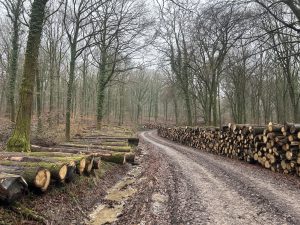

Today we were looking at a parcel of thinnings near Lydney. The oak on the right is firewood. The butts on the left are for milling into beams, planks or posts, and for cleaving. We look for straightness, lack of knots and twist and the right size for our various products. Rails are eighths of trees and should be approx 25cm at tops, posts and palings 35cm diameter up.

Various lichens growing on this Stowe Paling in Hawkwell Field at Stowe. The cleft oak is so natural an environment that a lichenologist thought the fence must have been around for a hundred years or so. It’s not much more than twenty years old.

Getting technical. Our chain mortiser on improvised jig. The posts are for Charlecote, 9’6″ overall, with 7′ out of the ground.


Hand digging at Woxeter Roman City, The English Heritage site near Shrewsbury. Thanks to Nigel Baker, archaeologist for these photos. He had the pleasure of studying our 127 post holes.

Rustic post and rail with gate

Stokesay Castle with cleft oak post and rail

Cleft oak gates
Here’s a pair of gates we recently sent up to an estate on the shores of Loch Fyne. They were delivered by pallet with 40 metres of our three rail post and rail.

Recently erected at Stowe Landscape Gardens
Work continues at Stowe with an initial 250 metres of fencing to border the Home Park. When the golf course moves this area will be taken back into the gardens.


 Here’s some fencing we put up three years ago in a local village. It’s basically cleft oak post and rail with oak weave around oak staves. There are no nails or other fixings. When nails were expensive and hard to come by this would have been a logical but labour intensive solution. Before pulped board and plastics weave was one of the few ways to fill a large gap (as with wattle and daub).